


 Español
 中文简体
中文简体 عربى
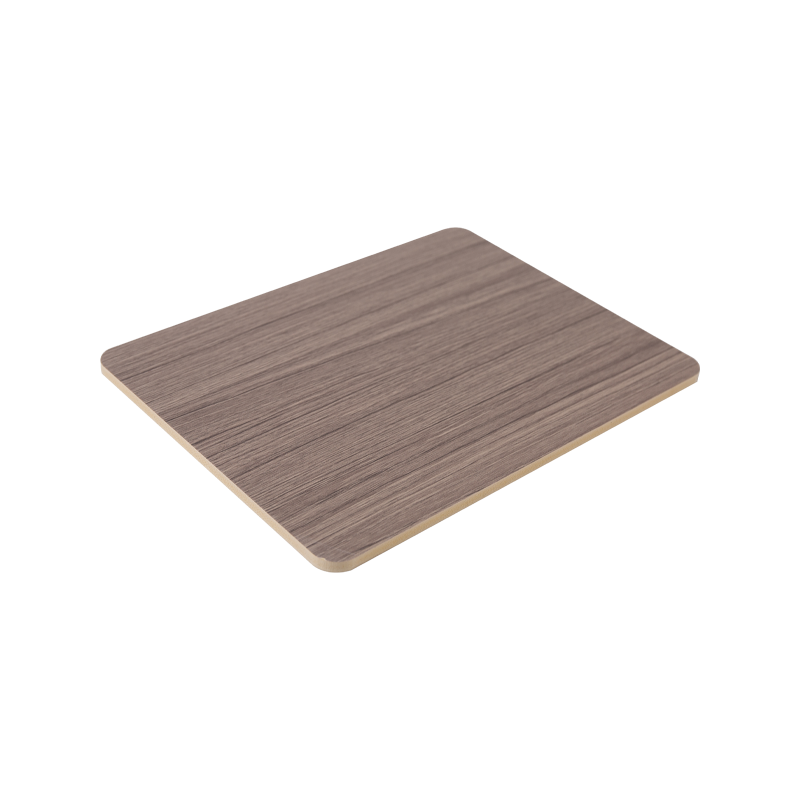
عربىA PVC wood veneer wall panel combines a rigid or semi-rigid polyvinyl chloride core with a real or simulated wood veneer surface layer, producing a wall cladding product that delivers the warmth and grain character of timber with significantly better moisture resistance, dimensional stability, and installation speed. These panels can be installed over most existing wall surfaces, provide a modest but measurable layer of thermal and acoustic insulation, and — depending on the surface finish — can be painted, though priming steps are critical. For rooms where solid timber panelling is cost-prohibitive or impractical, a quality PVC wood veneer wall panel is a sound, long-lasting alternative.
What Is a PVC Wood Veneer Wall Panel?
PVC wood veneer wall panels are a composite wall cladding system built in distinct layers, each performing a specific function. Understanding the construction explains why these panels behave differently from solid wood, MDF-backed veneer, or standard PVC sheeting:
| Layer | Material | Function |
|---|---|---|
| Face veneer | Real wood veneer (0.2 – 0.6 mm) or printed wood-look PVC film | Provides authentic grain texture, colour, and visual warmth |
| Adhesive layer | Heat-bonded or pressure-sensitive adhesive film | Bonds veneer to PVC core without water-based glues that cause warping |
| PVC core | Rigid or foam PVC, 5 – 12 mm thick | Structural substrate; provides moisture resistance, slight flex tolerance |
| Backing layer | Non-woven fleece or thin PVC film | Stabilises the panel and provides a bonding surface for wall adhesive |
| Surface coating | UV-cured lacquer or melamine finish | Protects veneer from scratches, moisture absorption, and UV fading |
The PVC core is the defining component that separates these panels from MDF-backed or plywood-backed veneer products. PVC does not swell when wet, does not harbour mould within the panel body, and does not delaminate in humid environments — making these panels suitable for bathrooms, kitchens, and below-grade spaces where timber-core panels would fail within a few years. Panel thicknesses typically range from 6 mm to 12 mm, with 8 mm and 10 mm being the most common for residential wall applications.
Can You Put Wood Veneer on Walls?
Yes — wood veneer on walls is a well-established interior finish with a long history in both residential and commercial settings, from mid-century Scandinavian interiors to contemporary hospitality design. The question is not whether it can be done, but which veneer system is appropriate for the specific wall and environment. PVC-backed veneer panels have largely replaced the older approach of applying raw veneer sheets directly to plasterboard, for several practical reasons:
Direct Veneer Application vs. PVC-Backed Panels
- Raw veneer sheets applied direct to wall: Requires a skilled veneer applicator, contact cement, a veneer hammer, and careful seaming at joins. The backing wall must be perfectly flat and dry. Any moisture migration through the wall causes bubbling and delamination within months. Skill-intensive and unforgiving of substrate imperfections.
- Paper-backed veneer sheets: Easier to handle than raw veneer and less prone to splitting, but still require a perfectly prepared substrate and careful adhesive application. Not suitable for humid rooms. Finishing requires multiple coats of compatible lacquer applied on-site.
- PVC-backed veneer panels: Factory-finished surface requires no on-site lacquering. Tongue-and-groove or click-lock profiles allow installation over moderately uneven walls using furring strips. Moisture-resistant throughout. One person can install a standard room in a single day. Suitable for bathrooms, kitchens, and basements.
- Veneer-faced MDF panels: Dimensionally stable and flat, making joinery easier than raw veneer. However, MDF swells irreversibly when wet, limiting these panels to dry interior rooms. Heavier than PVC-backed equivalents and more difficult to cut on-site without specialist blades.
For most residential wall veneer projects, PVC-backed panels offer the best combination of installation accessibility, moisture tolerance, and finished result. Professional-grade raw veneer application is appropriate when the designer requires specific exotic veneer species, book-matched panels, or continuous grain runs that factory-format panels cannot deliver.
Are PVC Wall Panels Paintable?
PVC wall panels can be painted, but the process requires specific preparation steps that differ significantly from painting plasterboard or timber — skipping these steps results in paint adhesion failure within weeks of application. The fundamental challenge is that PVC is a low-surface-energy material: standard paints bead on its surface rather than bonding to it at a molecular level.
Why Standard Paint Fails on PVC
Untreated PVC has a surface energy of approximately 38–40 millinewtons per metre (mN/m). Most water-based paints require a substrate surface energy above 42 mN/m for reliable adhesion. The result of painting bare PVC without treatment is a film that appears to adhere initially but peels away in sheets within 1–6 months, particularly at panel edges and corners where mechanical stress concentrates. The factory UV-lacquer coating on wood veneer PVC panels adds a further adhesion barrier that must be addressed before painting.
The Correct Process for Painting PVC Wood Veneer Panels
- Lightly abrade the surface: Use 220-grit sandpaper to scuff the factory lacquer surface uniformly. This mechanical abrasion increases surface area and removes the gloss finish, giving primer a physical key. Wipe away all sanding dust with a tack cloth before proceeding.
- Degrease thoroughly: Wipe the abraded surface with isopropyl alcohol (minimum 70% concentration) on a lint-free cloth. PVC panels accumulate release agents and handling oils during manufacturing and installation that undermine primer adhesion even on sanded surfaces.
- Apply a bonding primer: Use a shellac-based primer (such as Zinsser BIN) or a dedicated PVC/plastic bonding primer. These primers contain adhesion promoters — typically modified resins — that chemically bond to the low-energy PVC surface and create a high-energy base for topcoats. Apply one full coat and allow to cure for the full manufacturer-specified time, typically 45–60 minutes for shellac-based products.
- Apply compatible topcoat: Water-based acrylic or latex paints bond reliably over a properly primed PVC surface. Oil-based enamels also perform well. Apply two thin coats rather than one heavy coat to minimise the risk of solvent trapping beneath the film, which causes bubbling in humid conditions.
- Note on panels with real wood veneer face: If the panel carries an actual wood veneer surface rather than a printed PVC film, the veneer itself accepts paint like any finished timber surface — the preparation challenge applies primarily to any exposed PVC areas at panel edges, scribers, and end caps.
It is worth noting that painting a wood veneer surface — real or simulated — eliminates the primary reason for choosing it. If the design intent requires a painted finish, a standard PVC panel or MDF panel is a more cost-effective substrate than a wood veneer product.
Do PVC Wall Panels Insulate?
PVC wall panels provide a measurable but modest level of thermal and acoustic insulation — enough to make a noticeable difference in rooms cladded on all four walls, but not sufficient to replace dedicated insulation in a cold climate building envelope. The insulation performance depends primarily on panel thickness and whether a foam PVC core or rigid PVC core is used.
Thermal Insulation Performance
The thermal resistance (R-value) of a PVC wall panel system can be estimated from its material composition:
| Component | Thickness | Approximate R-Value (m2K/W) |
|---|---|---|
| Rigid PVC core panel (8 mm) | 8 mm | 0.04 – 0.06 |
| Foam PVC core panel (10 mm) | 10 mm | 0.25 – 0.35 |
| Foam PVC core panel (12 mm) | 12 mm | 0.30 – 0.42 |
| Panel + 25 mm air gap (battened install) | Total ~35 mm | 0.45 – 0.60 |
| Panel + 50 mm mineral wool in batten cavity | Total ~62 mm | 1.40 – 1.60 |
For context, a standard 100 mm brick wall has an R-value of approximately 0.12 m2K/W, and current UK building regulations require an R-value of approximately 3.7 m2K/W for new external wall insulation. A PVC panel alone does not meet building code insulation requirements for external walls, but a battened installation with mineral wool infill brings the panel assembly into a useful supplementary insulation range. For internal partition walls, the panel's inherent R-value is typically sufficient to reduce heat loss between rooms noticeably.
Acoustic Insulation Performance
PVC wall panels offer modest sound absorption within the room (reducing echo and reverberation) but limited sound transmission loss (blocking sound between rooms). The distinction matters:
- Sound absorption: The textured wood veneer surface and foam PVC core absorb mid-frequency sound energy, reducing the reflective echo that occurs in hard-surfaced rooms. A room cladded on multiple walls with 10 mm foam PVC panels may see reverberation time (RT60) reduced by 15–25%, which is perceptible as a quieter, less harsh acoustic environment. This benefit is particularly valued in home offices and media rooms.
- Sound transmission loss: A 10 mm PVC panel has a sound reduction index (Rw) of approximately 18–22 dB — less than a standard 12.5 mm plasterboard layer at approximately 28 dB. PVC panels should not be relied upon as the primary sound barrier between rooms. For meaningful acoustic separation, a decoupled stud wall with acoustic mineral wool and double plasterboard remains the correct approach, with PVC panels applied over the finished surface.
- Combined effect with battened installation: Installing PVC panels on battens over an existing wall introduces an air gap that can increase the overall sound reduction of the wall assembly by 3–5 dB compared to the bare wall alone, due to the decoupling effect. Filling the batten cavity with acoustic mineral wool (rather than thermal mineral wool) increases this benefit to approximately 8–12 dB improvement over the base wall.
How to Install PVC Wood Veneer Wall Panels
Installation method significantly affects both the visual result and the long-term performance of the panel system. The two primary approaches — direct adhesive bonding and battened framework — each suit different wall conditions:
Direct Adhesive Installation (Flat Walls)
- Substrate requirement: The wall must be flat to within 3 mm over a 2-metre straightedge. Measure the flatness of your wall before committing to this method — a hollow-sounding plasterboard wall with regular stud positions is usually acceptable; uneven brick or blockwork is not.
- Adhesive selection: Use a grab adhesive compatible with PVC — solvent-based contact adhesives and some polyurethane adhesives are not compatible and will either fail to bond or chemically attack the panel backing. Hybrid polymer adhesives (MS polymer or SMP-based) are the safest general choice and provide adequate open time for panel repositioning.
- Panel acclimatisation: Leave panels flat in the installation room for 24–48 hours before fixing. PVC panels have a thermal expansion coefficient of approximately 0.05 mm per metre per degree Celsius — a 3-metre panel in a room that fluctuates 10 degrees seasonally will move approximately 1.5 mm. Leave 2–3 mm expansion gaps at floor and ceiling to prevent buckling.
- Sequence: Start from the most visible corner of the room, work outward, and cut the final panel to width. Align tongue-and-groove joins carefully — a mallet and offcut block drive panels together without marking the face veneer.
Battened Framework Installation (Uneven Walls or Insulation Required)
- Batten sizing: 25 x 50 mm or 38 x 50 mm timber battens fixed vertically at 400–600 mm centres are standard for panels up to 10 mm thick. Horizontal battens at top and bottom provide fixing points for scribers and skirting board returns.
- Levelling: Pack behind battens with plastic packers to bring the face of each batten into a single plane. Check the completed batten framework with a long straightedge before fixing any panels — correcting panel alignment after fixing requires removal and refixing, which typically damages tongue-and-groove profiles.
- Panel fixing: Panels can be secret-nailed through the tongue, face-fixed with coloured-head pins at scribers and cornices, or adhesive-fixed to the batten face. Secret nailing through the tongue is the preferred method for continuous-length panels as it leaves no visible fixings.
- Service integration: The batten cavity provides a route for low-voltage wiring, data cables, and pipe boxing. Mark service positions clearly before panel installation — penetrating PVC panels for socket outlets after installation requires care to avoid splitting the panel face at the cut edge.
Comparing PVC Wood Veneer Panels to Alternative Wall Cladding Options
| Cladding Type | Moisture Resistance | Installation Ease | Cost Range (per m2) | Lifespan |
|---|---|---|---|---|
| PVC wood veneer panel | Excellent | Easy — DIY suitable | $25 – $75 | 15 – 25 years |
| Solid timber T&G cladding | Moderate — needs sealing | Moderate | $60 – $180 | 20 – 40 years |
| MDF veneer panel | Poor — swells when wet | Easy to moderate | $20 – $60 | 8 – 15 years (dry rooms) |
| Wallpaper (wood effect) | Poor to moderate | Easy | $8 – $35 | 5 – 10 years |
| Ceramic or porcelain tile | Outstanding | Difficult — trade preferred | $40 – $150+ | 30 – 50 years |
| Plasterboard + paint | Poor without moisture board | Moderate | $12 – $30 | 15 – 30 years |

 Tel:
Tel:
 E-mail:

