


 Español
 中文简体
中文简体 عربى
عربىPVC wood veneer wall panels are composite cladding boards that combine a polyvinyl chloride core with a wood-grain surface — either a real timber veneer or a high-definition printed wood-look film — to create a wall finish that looks and feels like timber while resisting moisture, warping, and mould. They are used across bathrooms, kitchens, living rooms, commercial interiors, and wet areas where solid wood panelling would be impractical or prohibitively expensive. A quality PVC wood veneer wall panel is virtually indistinguishable from real wood at normal viewing distances, installs directly over existing walls without plastering, and lasts 15–25 years with minimal maintenance.
What Is a PVC Wood Panel?
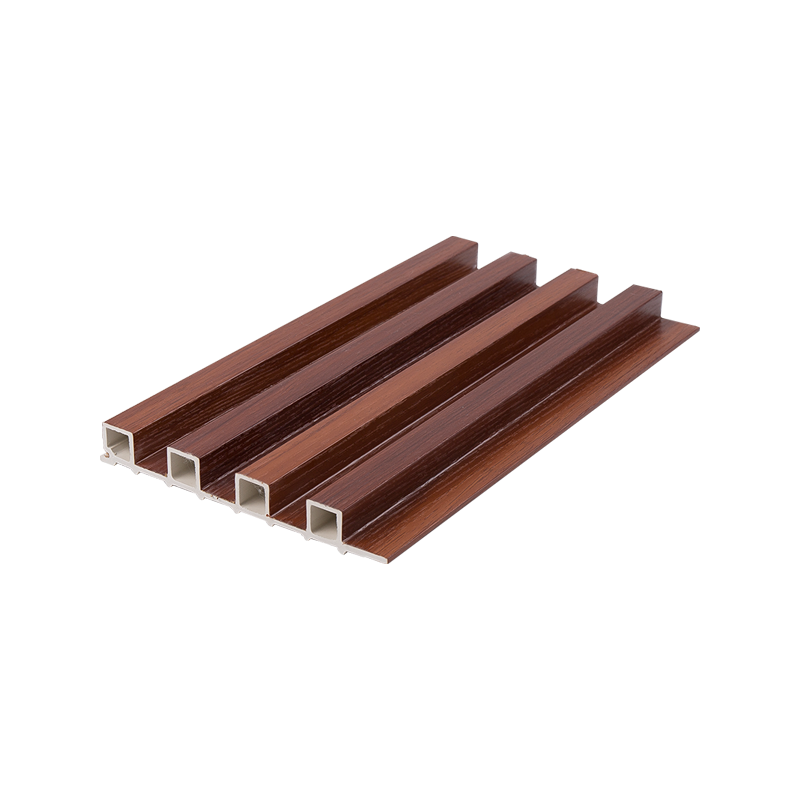
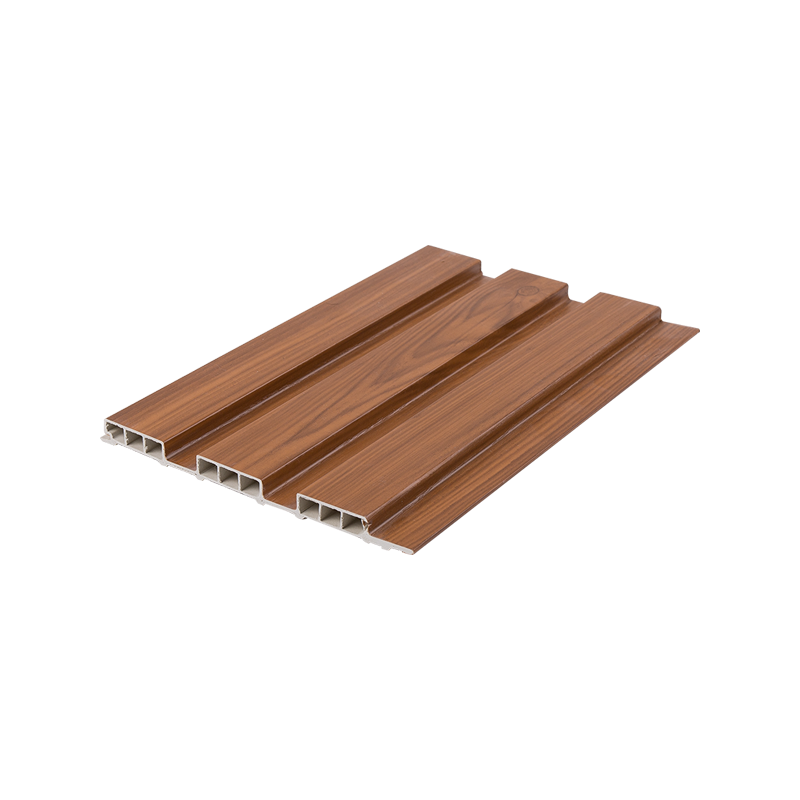
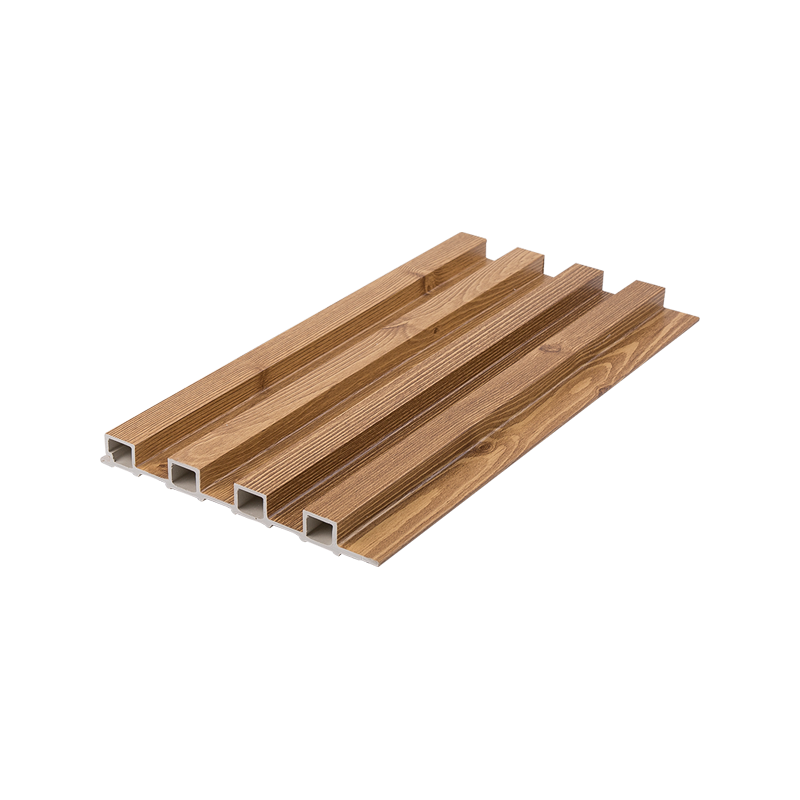
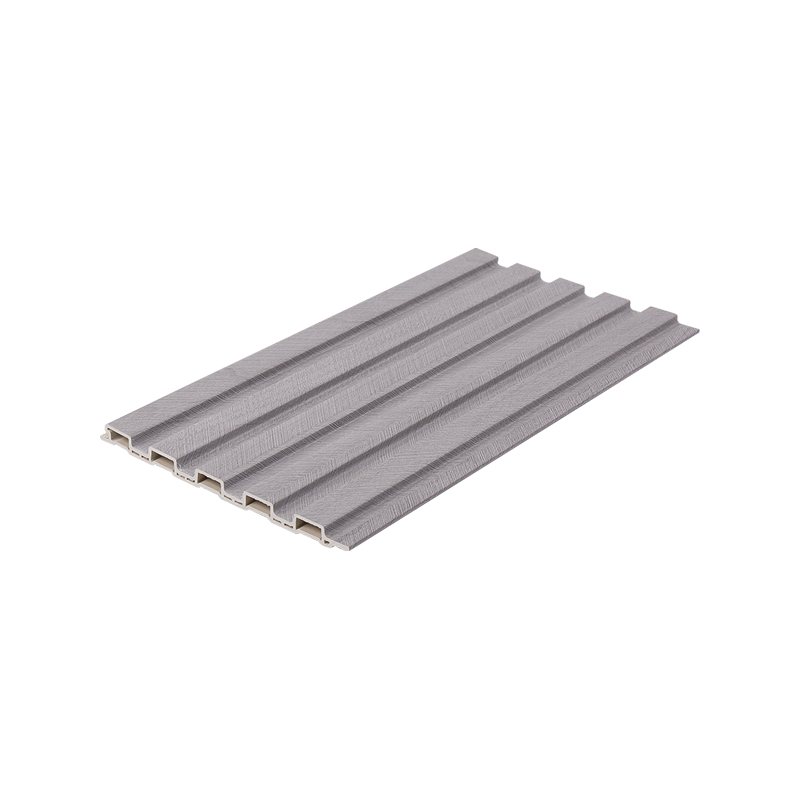
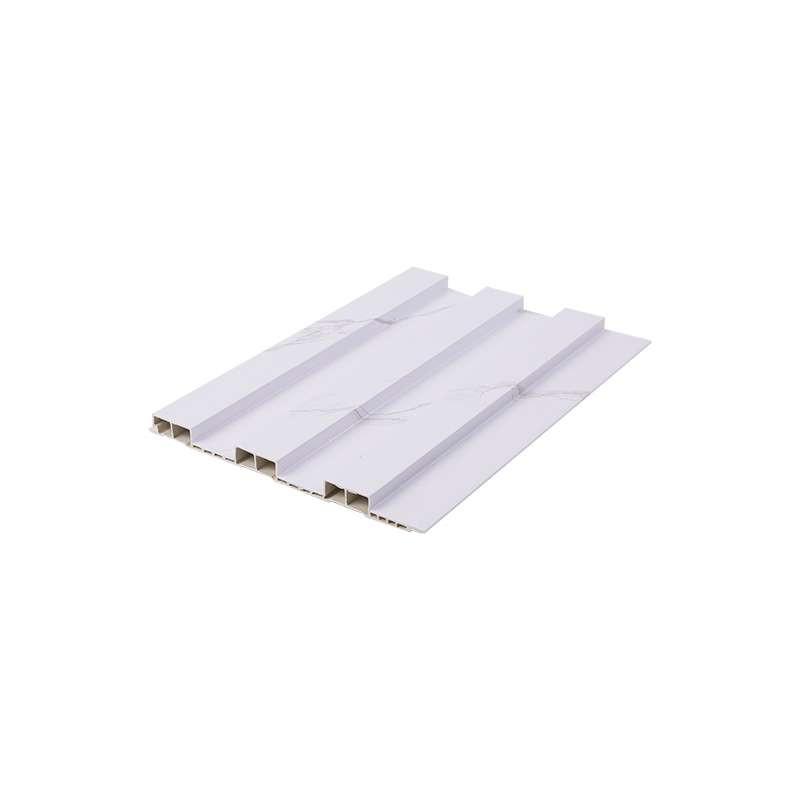
A PVC wood panel is a rigid or semi-rigid board manufactured by bonding a wood-effect surface layer onto a polyvinyl chloride substrate. The term covers two distinct product constructions that are sold under the same general name but differ significantly in surface authenticity, texture, and price:
| Construction Type | Surface Layer | Texture | Price Range | Best For |
|---|---|---|---|---|
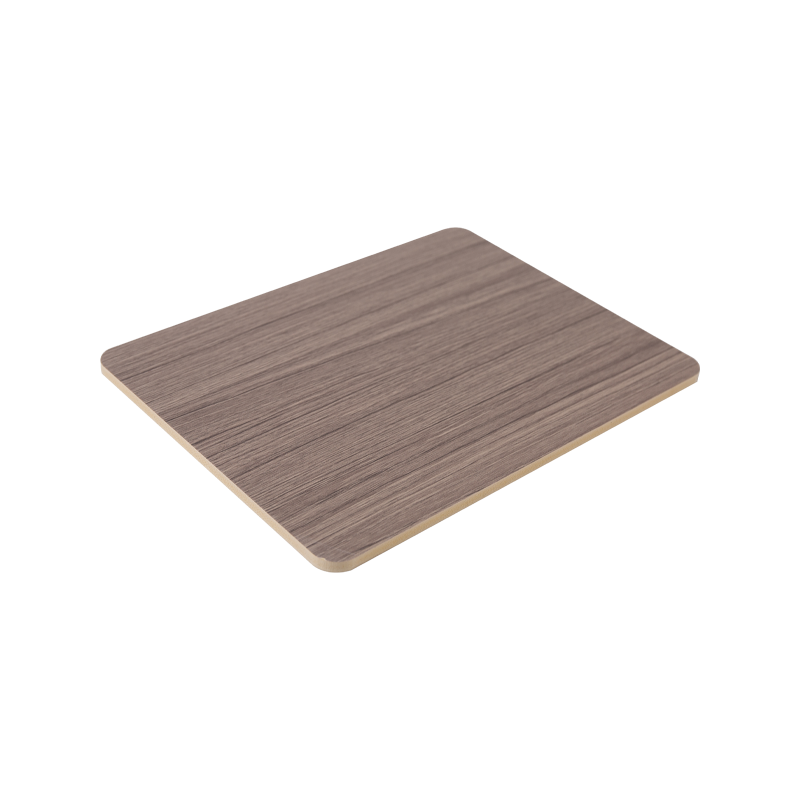
| Real veneer on PVC core | 0.2 – 0.6 mm genuine timber slice | Natural grain; tactile wood feel | High | Feature walls, luxury interiors |
| Printed wood-look PVC film | High-definition printed PVC or foil | Photographic grain; smooth to touch | Low to mid | Bathrooms, kitchens, budget projects |
| Embossed wood-texture PVC | Embossed PVC surface — no separate layer | Raised grain pattern; tactile but uniform | Low | Utility areas, garage interiors |
The PVC core is what separates all three types from traditional wood-backed veneer panels. PVC does not absorb water, does not swell in humid conditions, and does not provide a substrate for mould growth within the panel body — properties that timber-core equivalents cannot match. A 10 mm foam-PVC core panel weighs approximately 4–6 kg per square metre compared to 12–18 kg per square metre for MDF-backed veneer, making PVC wood panels significantly easier to handle and install without lifting equipment.
What Does PVC Wood Look Like?
This is the question most buyers want answered honestly before committing to a purchase. The visual result depends almost entirely on which of the three constructions described above is used — and the gap between the best and worst products in this category is substantial.
Real Veneer on PVC Core — Near Identical to Solid Timber
Panels carrying a genuine wood veneer surface are processed through the same slicing and finishing operations as veneer applied to traditional substrates. The veneer is sliced from the same timber logs used in furniture manufacture — oak, walnut, ash, teak, and wenge are the most common species — producing panels whose grain, colour variation, and surface texture are physically identical to those of the timber they came from. UV-cured lacquer is applied over the veneer at the factory, producing a finish whose sheen level (from matte at 5% gloss to satin at 30%) can be specified to suit the design intent. In a room with standard residential lighting, a real-veneer PVC panel is visually indistinguishable from a solid timber wall. The tell is at the cut edges, where the PVC core colour (typically white or grey) is visible beneath the veneer layer.
Printed Wood-Look Film — Close at Distance, Obvious Up Close
High-definition digital printing technology has advanced to the point where the best printed wood-look PVC panels fool most observers at distances above 1.5 metres. The grain patterns are photographically accurate, the colour depth is convincing under most lighting conditions, and premium products incorporate embossing that aligns with the printed grain to add a tactile element that purely flat prints lack. The limitation appears on close inspection — the grain repeat becomes visible in lower-quality products (typically repeating every 30–60 cm), the surface has a plastic gloss even on nominally matte finishes, and there is no natural variation between adjacent panels that characterises real timber. For bathrooms and utility areas where close-range inspection is not a design consideration, printed film panels are entirely adequate and considerably less expensive.
What to Look for When Assessing PVC Wood Panel Quality
- Grain repeat distance: Hold two adjacent panels side by side. In lower-quality printed panels, the grain pattern repeats exactly every 30–60 cm, producing a wallpaper-like regularity that reads as artificial even without deliberately looking for it. Premium products use larger digital print cylinders or randomisation algorithms that extend the repeat to 120 cm or more, reducing pattern repetition to a level that most observers do not detect.
- Embossing alignment with printed grain: Run a finger along a printed wood-look panel. On quality products, the raised and lowered areas of the embossed texture correspond precisely to where the grain lines fall in the printed image — pores are recessed, growth ring ridges are raised. Misalignment between print and emboss is the clearest indicator of budget manufacture.
- Edge colour consistency: Cut or break a small sample and examine the cross-section. Quality PVC cores are manufactured with through-coloured material (brown or grey rather than stark white) that reduces the visual impact of the core colour at panel joins and cut edges. White-core panels are more economical to produce but require careful attention to edge finishing during installation.
- Surface coating hardness: Drag a fingernail firmly across the panel surface. A quality UV-cured lacquer or wear layer resists scratching. A soft surface that marks easily will accumulate scratch damage within months of residential use and cannot be refinished in the way that real timber can.
What Are PVC Wall Panels Used For?
PVC wall panels in both wood-look and plain colour variants are used across a broader range of applications than most buyers initially consider. The moisture resistance and easy-clean surface that make them obvious choices for bathrooms also translate into advantages in commercial and high-traffic residential settings where conventional painted plasterboard requires frequent repainting and repair.
Residential Applications
- Bathroom walls and shower enclosures: The most established residential application. PVC panels installed over plasterboard or directly onto tile using construction adhesive create a fully waterproof surface that requires no grout maintenance, resists mould growth on the surface, and can be wiped clean with a damp cloth. A complete bathroom panelling project using PVC tongue-and-groove panels typically costs 40–60% less in material and labour than equivalent ceramic tile work, primarily because no specialist tiling contractor is required.
- Kitchen splashbacks and wall sections: Flat-profile PVC panels cut to height make effective kitchen splashbacks behind worktops and hobs. The smooth surface resists grease and food splashes and wipes clean without the grout lines that trap organic material in tiled splashbacks.
- Living room and hallway feature walls: Wood-effect PVC panels — particularly real veneer on PVC core products — create feature accent walls in living areas at a fraction of the cost of solid timber cladding. A 3 x 2.4 metre feature wall covered in oak veneer PVC panels typically costs $400–800 in materials, compared to $1,800–3,500 for an equivalent solid timber board installation.
- Basement and below-grade rooms: Timber wall finishes are impractical in below-grade rooms where ground moisture migration is a persistent risk. PVC panels installed on a battened framework provide a finished wall surface that performs reliably in conditions where MDF-backed panels would delaminate and timber boards would cup and split within 1–2 seasons.
Commercial and Hospitality Applications
- Hotel room cladding and headboard walls: Hospitality designers use real-veneer PVC panels to create timber-effect feature walls behind beds and along corridor walls. The panels' resistance to impact, ease of replacement if a section is damaged, and consistent appearance across large quantities make them more practical than solid timber for hotel environments where maintenance access and speed of refurbishment matter.
- Restaurant and cafe wall finishes: Commercial food service environments require wall finishes that can be wiped down to food hygiene standards. PVC panels with a smooth, lacquered surface meet this requirement while providing the warmth of a wood aesthetic that hard-surface alternatives such as painted plasterboard or ceramic tile cannot achieve.
- Retail shop fitting: Display walls in clothing, homeware, and furniture retail environments use PVC wood-look panels as a neutral background that makes merchandise colours read clearly without the visual competition of a patterned or highly reflective surface. The lightweight nature of PVC panels reduces the structural load implications of full-perimeter wall cladding in older retail buildings.
- Office reception areas and meeting rooms: The acoustic absorption provided by a foam-core PVC panel installation (approximately 15–25% reduction in reverberation time compared to bare plasterboard) makes wood-look panels a practical choice for meeting rooms and open-plan reception areas where acoustic quality affects the environment's professional impression.
What Are the Practical Advantages of PVC Wood Panels Over Alternatives?
The decision to use PVC wood panels rather than timber boarding, MDF-backed veneer, or ceramic tile is driven by a combination of performance, cost, and installation factors. The following comparison covers the most relevant decision criteria:
| Criterion | PVC Wood Panel | Solid Timber Boarding | MDF Veneer Panel | Ceramic Tile |
|---|---|---|---|---|
| Moisture resistance | Excellent — core is fully waterproof | Poor — swells, cups, and moulds if wet | Poor — MDF swells irreversibly | Excellent — surface; grout lines are vulnerable |
| Installation speed | Fast — adhesive or click-fit; one day per room | Slow — nailing, acclimatisation, finishing required | Moderate — adhesive; flat substrate essential | Very slow — tiling, grouting, curing: 3–5 days |
| Material cost per m2 | $25 – $75 | $60 – $180 | $20 – $60 | $40 – $150+ |
| Maintenance requirement | Very low — wipe clean | High — oiling, sanding, refinishing cycles | Low in dry conditions | Moderate — grout cleaning and resealing |
| Lifespan | 15 – 25 years | 30 – 50 years if maintained | 8 – 15 years (dry rooms only) | 30 – 50 years (tile), 5 – 10 years (grout) |
| DIY suitability | High — standard tools; no specialist skills | Low — joinery skills required | Moderate | Low — specialist tiling skills required |
Room-by-Room Guide to Choosing the Right PVC Wood Panel
Not all PVC wood panel products perform equally across all room types. The following room-specific guidance matches construction type and surface specification to the conditions present in each space:
- Bathroom and wet room: Select panels with a minimum IP54-rated surface finish (splash-proof) and a foam PVC core rather than rigid PVC — foam core provides a slight flex tolerance that accommodates minor substrate movement without cracking the panel or opening joints. Avoid real wood veneer in shower enclosures — even with waterproof core, the veneer edge at joints can absorb water over years of sustained splash contact. Printed film or embossed PVC is the correct choice for direct water contact zones.
- Kitchen: Prioritise surface hardness and heat resistance. A UV-cured acrylic or polyester lacquer over the panel surface withstands the temperatures produced by wall-mounted toasters and steam from cooking at normal residential distances. Specify panels with a surface hardness above 2H pencil rating — ask the supplier for the surface coating specification rather than relying on general product descriptions.
- Living room feature wall: Real veneer on PVC core is the appropriate choice when visual authenticity matters. Specify oak, walnut, or ash veneer in a matte or satin lacquer finish — high-gloss finishes in living rooms show fingerprints, dust, and surface irregularities more readily than matte alternatives. A 30% gloss satin is the most practical finish for residential living areas.
- Basement or cellar: Install on a battened framework with a 20–25 mm ventilated air gap behind the panels rather than direct adhesive bonding to the masonry. The air gap allows any residual moisture migrating through the wall to evaporate rather than being trapped behind the panel where it would cause adhesive failure and surface mould on the wall substrate.
- Commercial corridor or reception: Specify panels with a Martindale abrasion rating above 6,000 cycles for surface film durability — commercial traffic levels produce surface contact that residential-rated panels are not engineered to withstand. Impact resistance ratings (typically expressed as ball drop resistance in Joules) should also be confirmed with the supplier for wall sections in high-traffic zones.

 Tel:
Tel:
 E-mail:

