


 Español
 中文简体
中文简体 عربى
عربىArticle Directory
- 1 Introduction: The B2B Imperative for Dimensional Integrity
- 2 Scientific Validation: Testing Dimensional Change
- 3 Mitigation Strategies: Material and Design Factors
- 4 Installation and Quality Control for Project Success
- 5 Conclusion: Delivering Aesthetic and Enduring Value
- 6 Frequently Asked Questions (FAQ)
Introduction: The B2B Imperative for Dimensional Integrity
For large-scale commercial and residential projects, the enduring visual integrity of the finished wall surface is paramount. When specifying Wood Grain PVC WPC Wall Panels Designs for Decoration, the single biggest technical risk is dimensional instability—the tendency of a panel to expand, contract, or warp due to changes in ambient temperature and humidity. Such failures result in costly joint separation or unsightly buckling, undermining the entire project's quality.
Haining Jiazhimeng Integrated Home Co., Ltd. has prioritized this technical challenge since entering the field in 2006 and developing WPC materials in 2013. With 17 years of experience in interior decoration materials, our commitment, backed by advanced production equipment and independent R&D capability, is to provide partners worldwide (Southeast Asia, Australia, the Middle East, South America, etc.) with panels engineered for long-term stability.
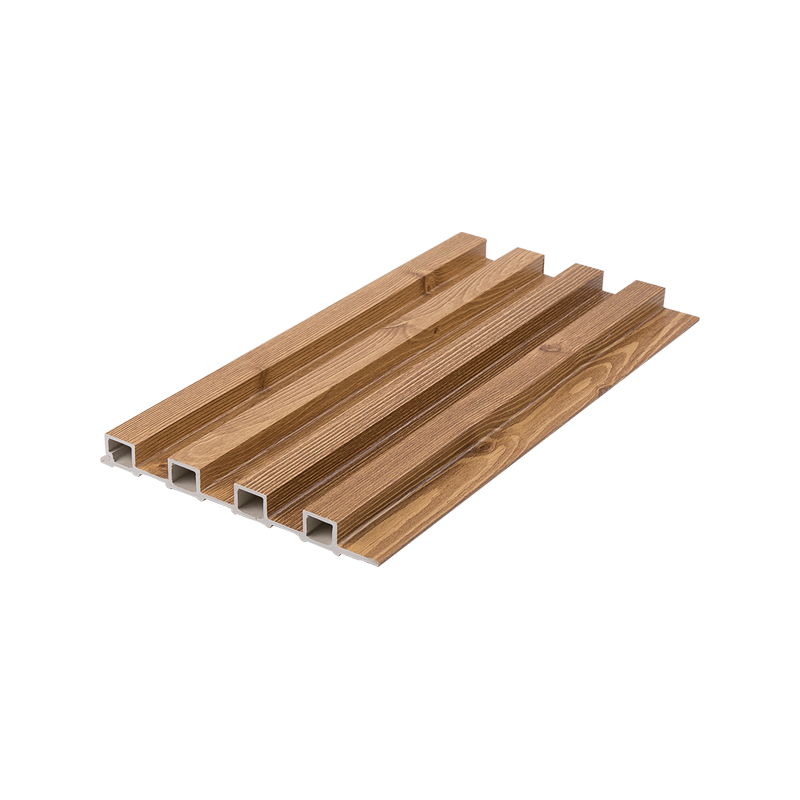
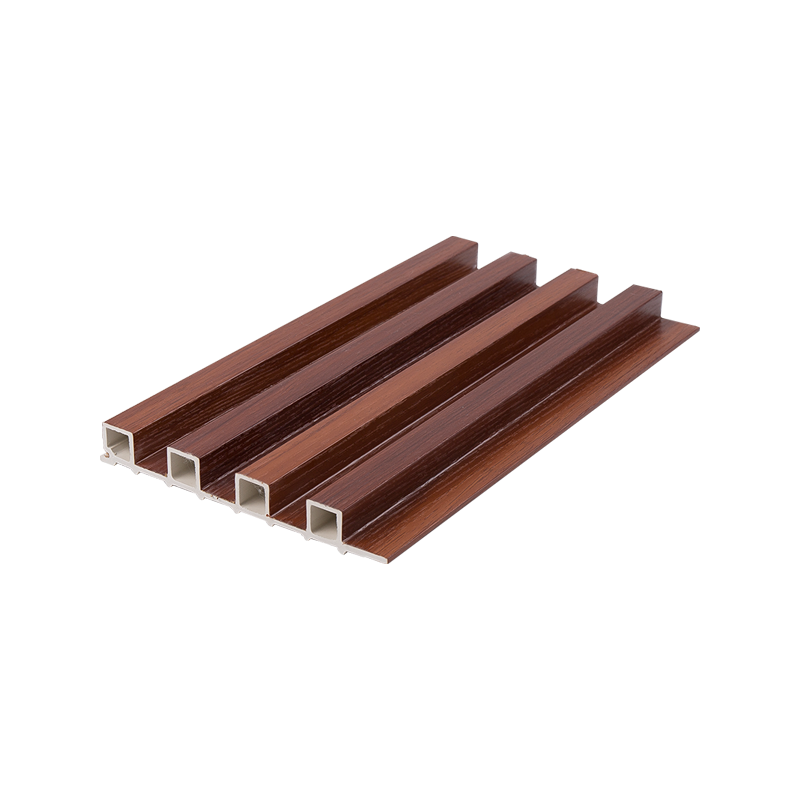
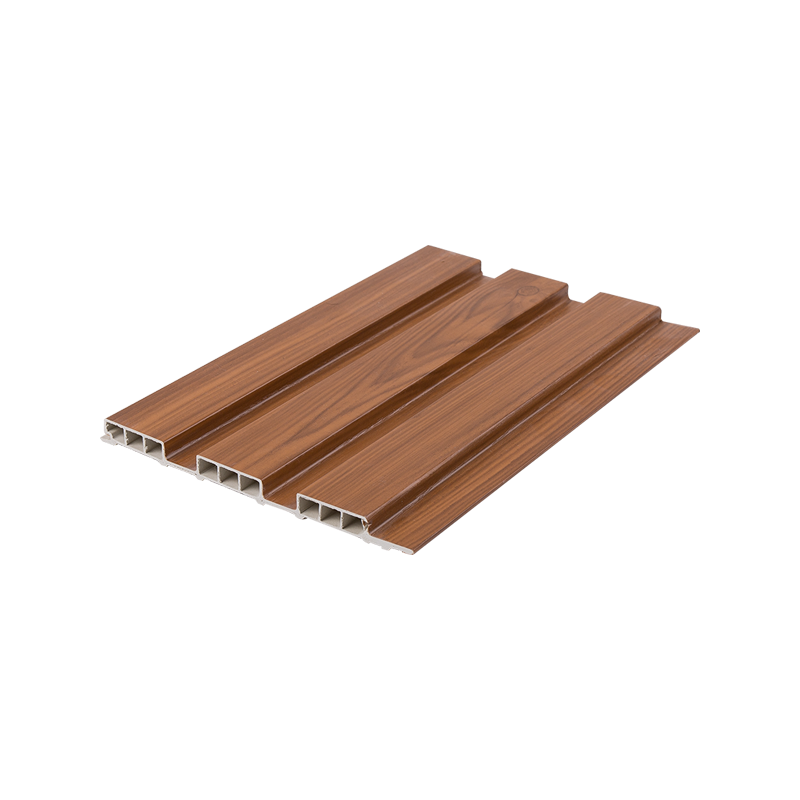
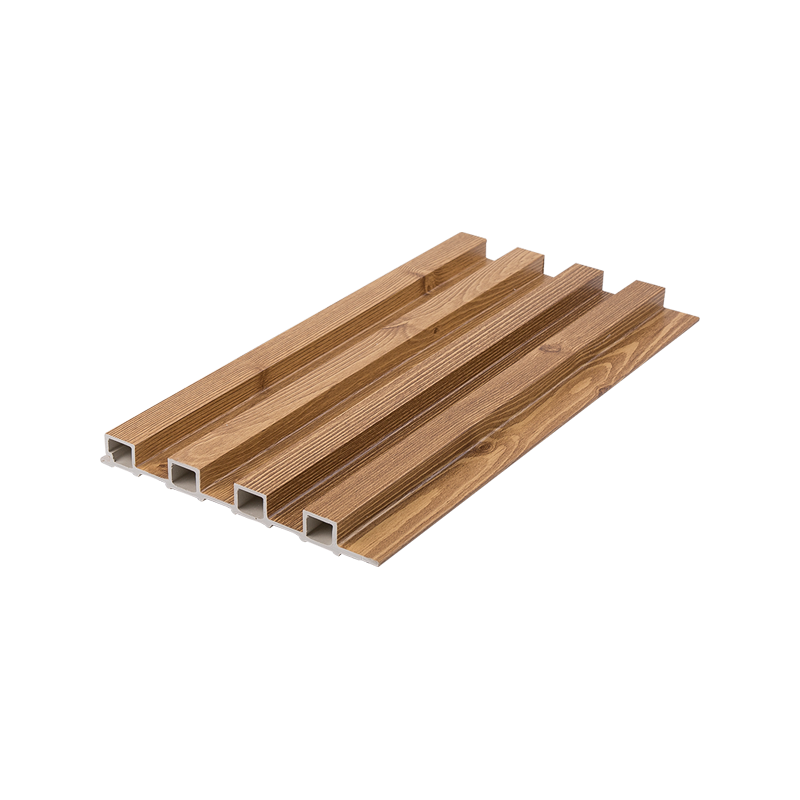
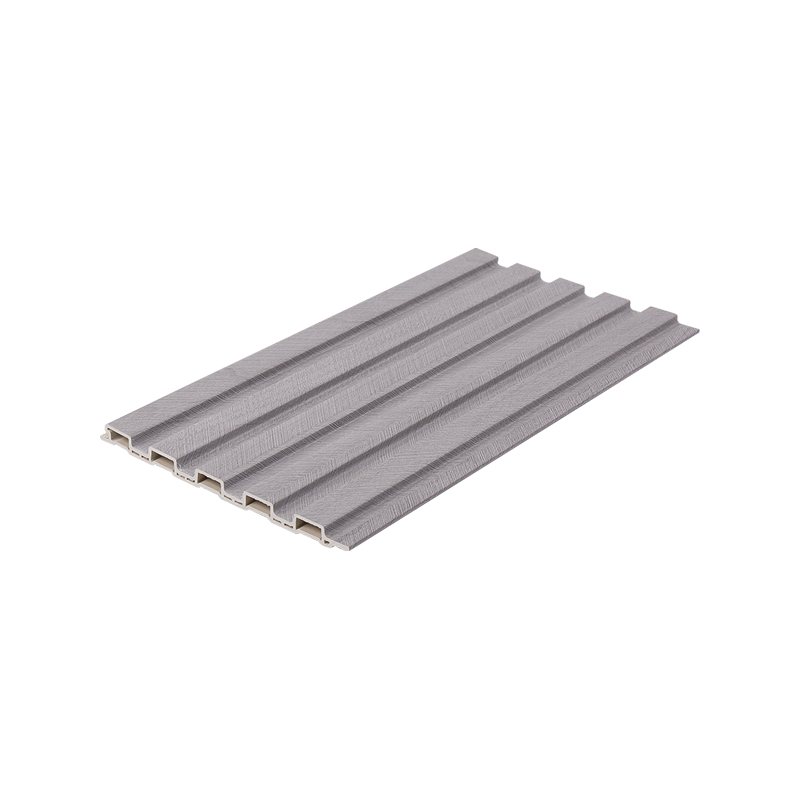
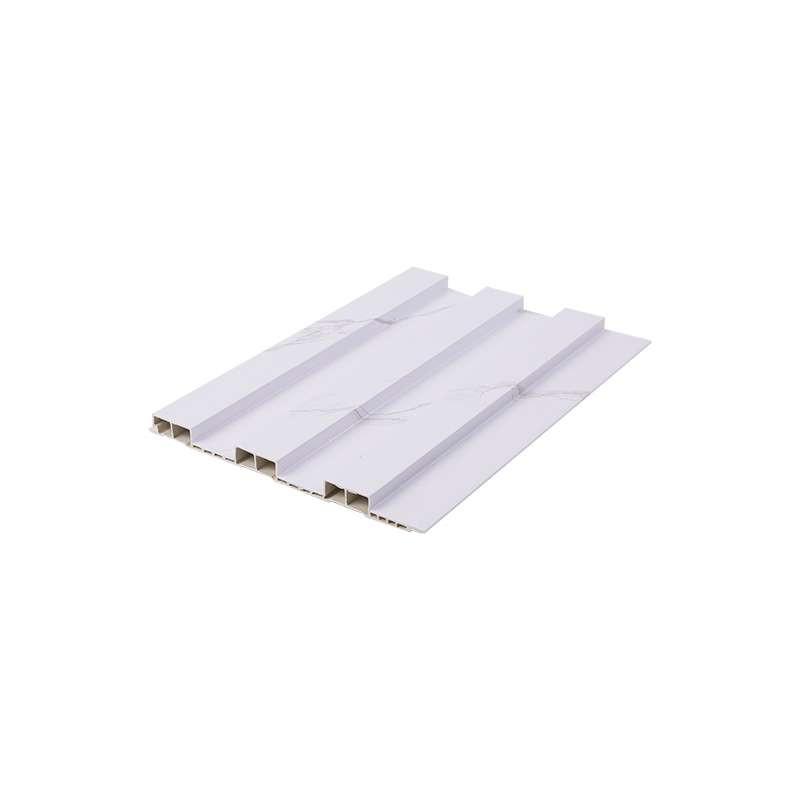
150*17mm WPC Louvers Wall Panel Decoration Material
Scientific Validation: Testing Dimensional Change
Standardizing Thermal expansion testing WPC wall panels
The Coefficient of Thermal Expansion (CTE) is the primary metric for stability under temperature shifts. B2B procurement must insist on verified CTE data. This involves controlled **Thermal expansion testing WPC wall panels**, where panel lengths are precisely measured under both low and high temperature extremes (e.g., 0°C to 60°C). The total change in length relative to the original length provides the CTE, which is vital for calculating the required expansion gap during installation. A lower CTE indicates superior dimensional stability and a lower risk of buckling.
Assessing Hydroscopic Stability: Moisture absorption rate WPC wall cladding
While the PVC component in WPC resists moisture, the natural wood powder content is hydroscopic. Therefore, the **Moisture absorption rate WPC wall cladding** must be strictly controlled, especially for installation in bathrooms, kitchens, or basements. WPC materials inherently perform better than traditional composite wood products due to the encapsulating PVC matrix. However, the precise ratio of PVC to wood powder is the key differentiator in performance.
The moisture stability of WPC contrasts favorably with materials like bamboo fiber board:
- WPC's encapsulated structure drastically limits moisture ingress, providing a significant technical advantage in wet areas.
- Bamboo fiber board, while eco-friendly, often relies more on natural fibers and is consequently more susceptible to swelling and shrinking from humidity changes.
| Material | Primary Moisture Absorption Mechanism | Typical Swelling/Warping Risk | Best Application Environment |
| Wood Grain PVC WPC Wall Panels | Absorption limited by PVC encapsulation | Low (Excellent for high humidity) | Bathrooms, Commercial Lobbies, Coastal Areas |
| Bamboo Fiber Board | Absorption primarily by natural cellulose fibers | Medium to High (Requires conditioning) | Temperature-stable interiors, Bedrooms, Dry Areas |
Mitigation Strategies: Material and Design Factors
Material Composition and Long-term warping control in PVC WPC wall panels
Warping is typically a long-term failure caused by internal stress relaxation or uneven thermal/moisture exposure. To achieve effective **Long-term warping control in PVC WPC wall panels**, the supplier must use high-quality stabilizing additives and ensure the PVC and wood powder are perfectly compounded. A lower quality WPC, often characterized by excessive filler content or inadequate mixing, will demonstrate greater internal stress and a higher propensity for warping over time. Our focus on continuous product development and updates ensures the structural integrity of our composite materials.
Comparing Materials: WPC wall panel vs bamboo fiber board dimensional stability
When comparing the two, WPC offers superior resistance to both temperature and humidity-induced dimensional changes due to its thermoplastic component. This makes WPC a safer and more durable choice for environments with inevitable climate fluctuations, ensuring project longevity. Bamboo fiber boards, while offering a different aesthetic and often a higher natural fiber content, necessitate much stricter acclimation and temperature control post-installation.
Installation and Quality Control for Project Success
Site Management: Preventing WPC wall panel joint separation through preparation
Even with low-CTE panels, **Preventing WPC wall panel joint separation** requires professional installation practices. Panels must be acclimated on the job site for at least 48 hours before installation to reach equilibrium with the ambient temperature and humidity. Crucially, B2B installers must leave specified expansion gaps (typically 1-3 mm, depending on CTE) at all panel edges, corners, and terminations. Failure to do so, especially on long runs, results in the buckling of the panel when temperatures rise.
Quality Assurance and Procurement
We provide factory services, not only independently producing all kinds of wall products but also establishing a cooperative relationship with manufacturers of supporting products required for wall panels, such as lines and lamp strips. This integrated approach ensures that all necessary components are dimensionally compatible and simplifies the purchasing process for our partners. By providing convenience, worry-free procurement, and quality service, we enable our customers to focus on project execution.
Conclusion: Delivering Aesthetic and Enduring Value
The long-term success of any installation using **Wood Grain PVC WPC Wall Panels Designs for Decoration** is fundamentally dependent on the material's dimensional stability. By utilizing technical data from **Thermal expansion testing WPC wall panels** and controlling the **Moisture absorption rate WPC wall cladding**, B2B partners can ensure their projects maintain aesthetic integrity and structural soundness for years to come. We welcome opportunities to collaborate and achieve win-win results.
Frequently Asked Questions (FAQ)
- What is the most common cause of joint separation in WPC wall panels after installation? The most common cause is the failure to leave sufficient expansion gaps at the perimeter (walls, ceiling, floor) combined with a high Coefficient of Thermal Expansion (CTE) in the panel itself, leading to expansion that forces the joints apart or causes buckling.
- How does the PVC-to-wood-powder ratio impact dimensional stability? A higher ratio of PVC and a lower ratio of wood powder generally leads to lower **Moisture absorption rate WPC wall cladding** and better stability, as the PVC is more dimensionally stable than the wood fiber. However, this may slightly impact the feel and weight.
- What is the purpose of the **Thermal expansion testing WPC wall panels** in the lab? The purpose is to determine the material's Coefficient of Thermal Expansion (CTE). This value is essential for installers to calculate the minimum required perimeter gap, which is the primary strategy for **Preventing WPC wall panel joint separation**.
- Is WPC or **WPC wall panel vs bamboo fiber board dimensional stability** better for high-humidity areas like a commercial washroom? WPC generally offers superior dimensional stability in high-humidity areas because the PVC component significantly minimizes water absorption and subsequent swelling, giving it an advantage over natural fiber-heavy boards.
- Can warping be fully prevented in all **Long-term warping control in PVC WPC wall panels** applications? While good quality WPC and proper installation (acclimation, expansion gaps) significantly control warping, it cannot be entirely prevented if the installation site experiences extreme, uneven heating or cooling (e.g., direct, prolonged sunlight exposure on only one side of the panel).

 Tel:
Tel:
 E-mail:

