


 Español
 中文简体
中文简体 عربى
عربىArticle Directory
- 1 Material Composition: Deconstructing the PVC-WPC Composite
- 2 Quantifying Water Absorption: Test Methods and Performance Data
- 3 Mold and Mildew Resistance: Evaluating Biological Durability
- 4 Performance in Specific High-Humidity Applications
- 5 Technical Specification and Procurement Guidelines
- 6 Frequently Asked Questions (FAQ)
- 6.1 1. Can the wood grain surface of a PVC WPC panel be damaged by constant exposure to water in a shower?
- 6.2 2. If water gets behind the panels during installation or from a leak, what happens?
- 6.3 3. How does the performance of a PVC-based WPC compare to a PE-based WPC in humid environments?
- 6.4 4. Are there any special cleaning or maintenance requirements to preserve the mold resistance?
- 6.5 5. For a B2B buyer, what is the single most important technical document to request from a supplier for a basement project?
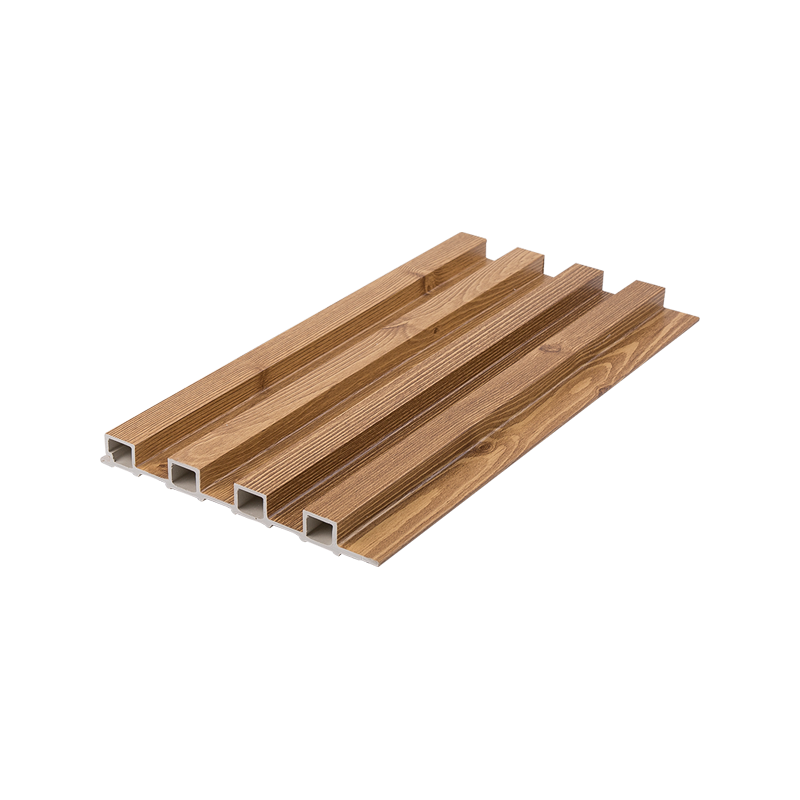
The selection of interior wall cladding for high-humidity environments presents a significant engineering challenge, balancing aesthetic desires with stringent performance requirements. Wood Grain PVC WPC Wall Panels Designs for Decoration have emerged as a prominent solution, offering the visual warmth of natural wood with purported enhanced durability. For architects, contractors, and B2B distributors, a critical question remains: do the fundamental material properties—specifically water absorption and mold resistance—genuinely qualify these panels for demanding applications like bathrooms, basements, and spas? This article delivers an engineer-level analysis of the hygroscopic and biological performance of PVC-WPC composites, providing a data-driven framework for specification in moisture-prone environments.
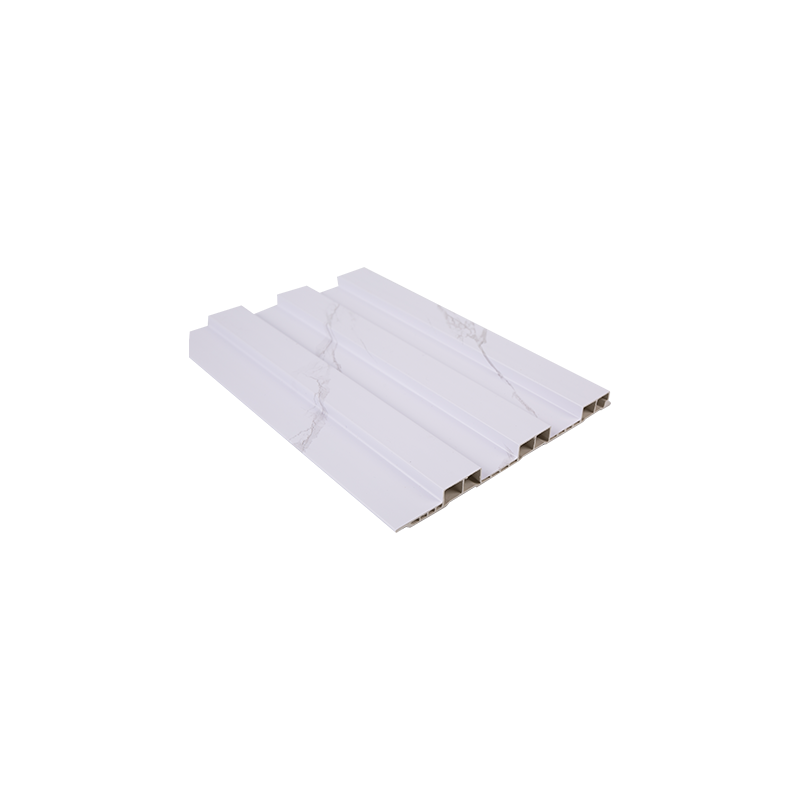
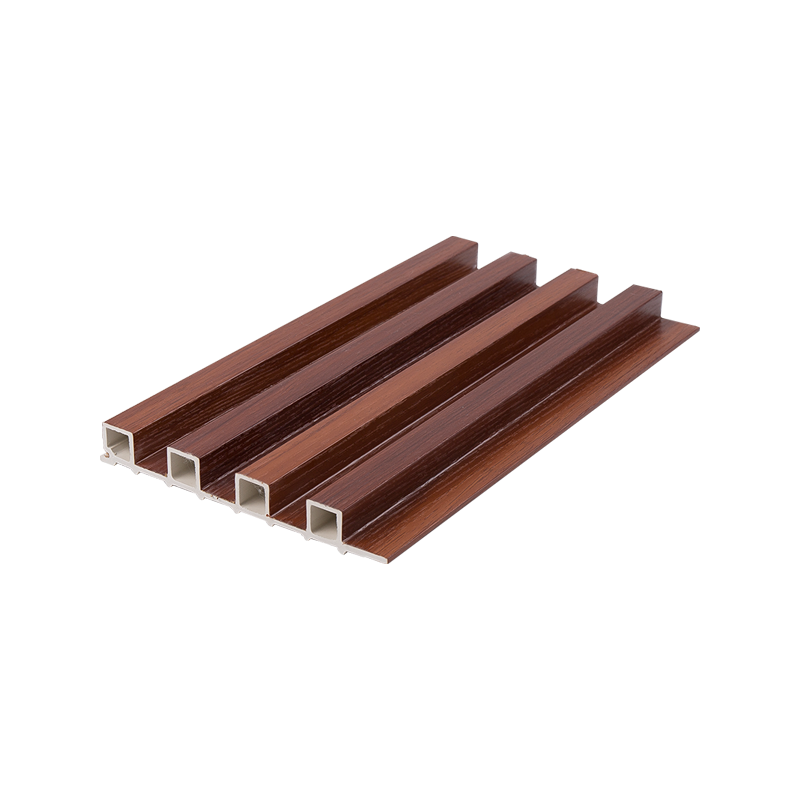
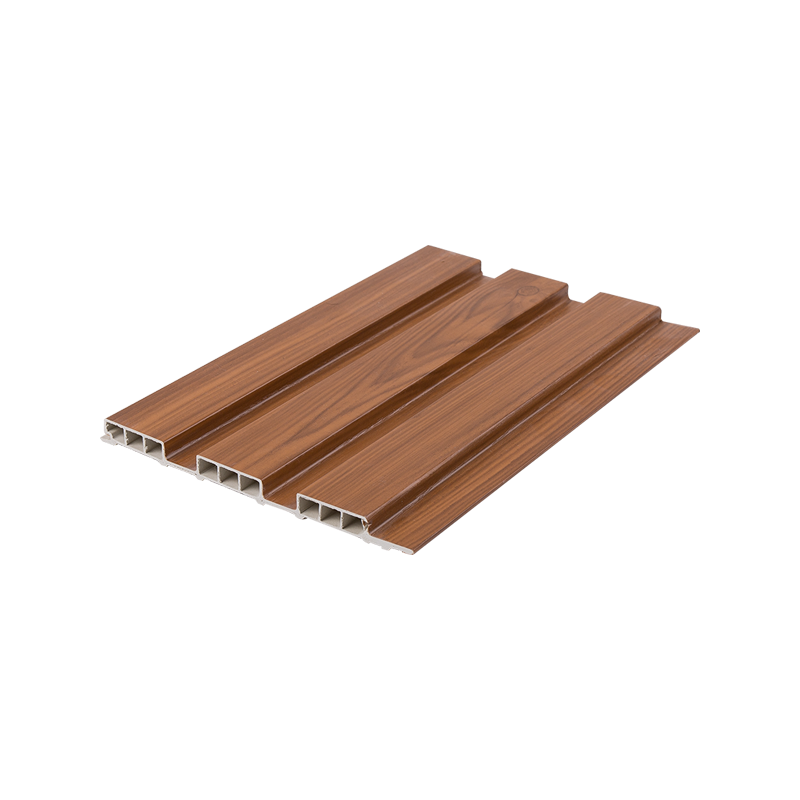
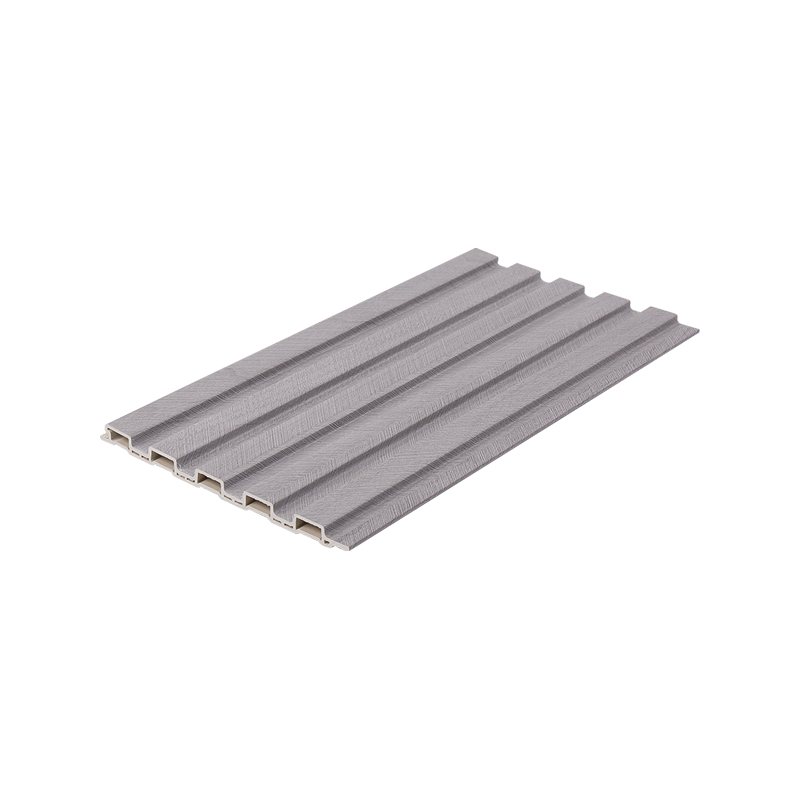
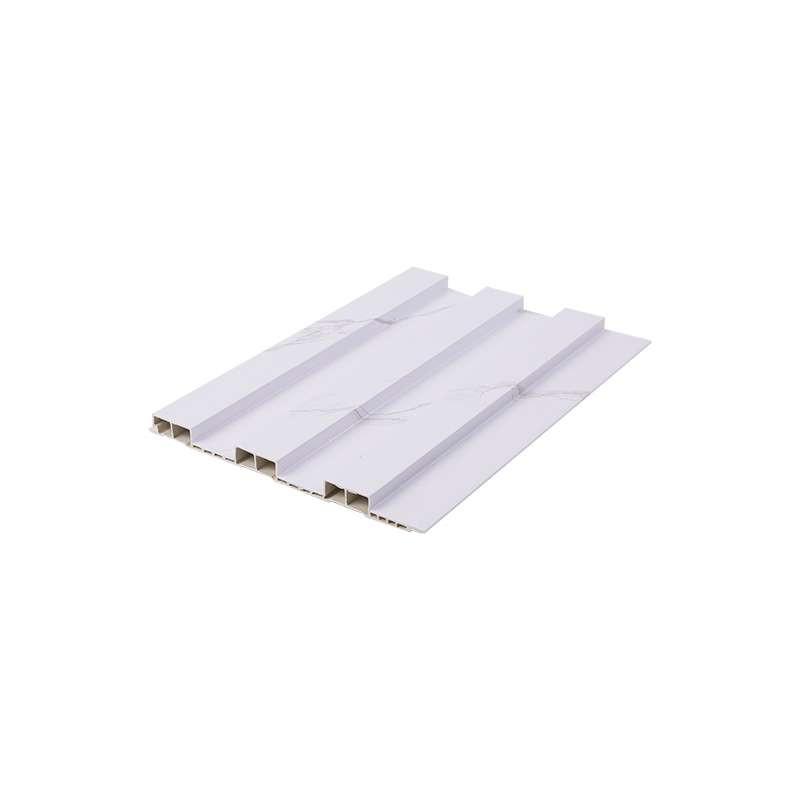
195*15mm WPC Louvers Wall Panel Decoration Material
Material Composition: Deconstructing the PVC-WPC Composite
Understanding performance begins with the material's engineered structure. Wood-Plastic Composite (WPC) wall panels typically consist of a base matrix of Polyvinyl Chloride (PVC) and/or Polyethylene (PE), reinforced with wood flour or fibers (usually 30-60% by weight), and a package of additives including stabilizers, lubricants, and coupling agents. The wood grain texture PVC panels aesthetic is achieved through precision embossing during the extrusion process. The synergy between these components dictates the panel's behavior in the presence of moisture.
- PVC Matrix: Provides the continuous, hydrophobic phase that is inherently resistant to water absorption and microbial growth.
- Wood Flour/Fibers: Introduces the hydrophilic, organic component that is susceptible to water uptake and can serve as a potential nutrient source for mold.
- Additives & Coupling Agents: Critical for bonding the hydrophobic plastic and hydrophilic wood, thereby encapsulating the wood particles and mitigating their inherent vulnerabilities.
Quantifying Water Absorption: Test Methods and Performance Data
Water absorption is a standardized metric, typically measured per ASTM D570 (24-hour immersion) or more rigorous tests like EN 317 (long-term immersion).
Mechanisms of Water Ingress in WPCs
Water penetrates a WPC through two primary pathways: 1) capillary action through micro-gaps at the polymer-wood fiber interface, and 2) direct diffusion and swelling of the wood particles themselves. The quality of the composite—specifically the efficiency of the coupling agent and the degree of wood particle encapsulation—directly controls the rate and extent of water absorption. High-quality waterproof WPC wallboard is characterized by excellent interfacial bonding, severely limiting both pathways.
Comparative Water Absorption Rates
The performance of PVC-WPC panels must be contextualized against traditional materials. The following table presents typical water absorption values after 24 hours of immersion, illustrating the superior performance of a well-formulated composite.
| Material | Water Absorption (% by weight) | Implication for Humid Environments |
| High-Quality PVC-WPC Panel | 0.5% - 1.5% | Minimal dimensional change, low risk of warping or buckling. |
| Medium-Density Fiberboard (MDF) | >60% | Severe swelling, delamination, and structural failure. |
| Solid Wood (Pine) | 25% - 40% | Significant expansion/contraction, cracking, cupping. |
| Ceramic/Porcelain Tile | <0.5% | Dimensionally stable, but requires grout which is porous. |
This exceptionally low absorption rate is what qualifies these products as bathroom suitable WPC panels, as they do not provide a significant internal reservoir for moisture.
Mold and Mildew Resistance: Evaluating Biological Durability
Mold growth requires moisture, a nutrient source, oxygen, and a suitable temperature. The assessment focuses on how WPC panels perform against these criteria.
Inherent Resistance and Testing Standards
The PVC matrix is inherently non-nutritive to mold. The key is whether the encapsulated wood fibers are accessible as a food source. High-quality manufacturing ensures they are not. Mold resistance is quantitatively tested per standards like ASTM G21 or ISO 846, which involve inoculating the material with a mixture of fungal spores and observing growth over 28 days in a high-humidity chamber. A high-performance mold proof wall paneling will achieve a rating of 0 (No Growth) or 1 (Traces of Growth, less than 10% coverage).
Comparison of Mold Growth Potential
| Material | ASTM G21 Rating (Typical) | Nutrient Availability | Ease of Cleaning/Sanitization |
| High-Quality PVC-WPC | 0 (No Growth) | Very Low (Encapsulated fibers) | Excellent (Non-porous surface) |
| Drywall / Gypsum Board | 4 (Heavy Growth) | High (Paper facing, gypsum core) | Poor (Absorbs moisture, degrades) |
| Solid Wood | 3 (Moderate Growth) | High (Cellulose, hemicellulose) | Fair (Requires sealants) |
| PVC Plastic Sheet | 0 (No Growth) | None | Excellent |
Performance in Specific High-Humidity Applications
The theoretical performance must be validated against real-world environmental conditions.
Bathroom and Shower Areas
In bathrooms, panels are subjected to cyclic humidity, direct water splashes, and condensation. The critical factors are the panel's bulk properties and the integrity of the installation system. A wood grain texture PVC panel with a water absorption rate below 1.5% will not swell or warp from ambient humidity. For shower areas, the panel joints and the substrate behind become the critical points. Proper installation using moisture-resistant substrates and sealed joint systems is paramount to realizing the full potential of bathroom suitable WPC panels.
Basements and Interior Spas
Basements often contend with vapor drive from the exterior, leading to persistent high humidity and potential condensation on cold wall surfaces. The low water absorption and mold resistance of PVC-WPC make it an ideal basement wall cladding material, as it will not degrade or support biological growth under these conditions. Similarly, in interior spas with constantly elevated humidity levels, the material's stability ensures long-term performance without the deterioration seen in organic materials.
Technical Specification and Procurement Guidelines
For B2B buyers and specifiers, verifying performance claims with objective data is essential.
- Request Certified Test Reports: Insist on seeing third-party test reports for water absorption (ASTM D570) and mold resistance (ASTM G21). Do not rely on marketing claims of "waterproof" or "mold-resistant" without data.
- Specify Key Metrics: In your procurement documents, specify maximum allowable water absorption (e.g., ≤1.5%) and a minimum mold resistance rating (e.g., ASTM G21 Rating of 0 or 1).
- Evaluate the Integrated System: Source panels from manufacturers, like Haining Jiazhimeng Integrated Home Co., Ltd., that offer a complete system—including panels, matching accessories, and recommended installation protocols. A manufacturer with 17 years of experience in wallboard development is more likely to have optimized the formulation and installation details for performance in humid area wall solutions.
- Consider the Full Profile Design: Inquire about the panel's backing and tongue-and-groove design. A design that allows for air circulation behind the panels can further mitigate any potential for moisture entrapment.
Frequently Asked Questions (FAQ)
1. Can the wood grain surface of a PVC WPC panel be damaged by constant exposure to water in a shower?
The wood grain is an embossed texture on the PVC cap, not a veneer or coating. Since the color and texture are integral to the material, they cannot be "washed off" or fade from water exposure. The surface is non-porous, allowing for repeated cleaning with mild detergents without damaging the finish, making it a highly durable wood grain texture PVC panel for wet areas.
2. If water gets behind the panels during installation or from a leak, what happens?
While the panels themselves are highly resistant, the substrate and wall cavity are not. It is critical to install these panels over a moisture-resistant substrate (like concrete, cement board, or moisture-treated plywood) and, in very wet areas, to consider a secondary moisture barrier. The panels themselves will not be damaged by temporary exposure, but prolonged standing water behind any wall cladding can lead to problems.
3. How does the performance of a PVC-based WPC compare to a PE-based WPC in humid environments?
PVC-based WPCs generally exhibit superior performance in several key areas relevant to humidity:
- Dimensional Stability: PVC has a higher inherent rigidity and lower thermal expansion coefficient than PE, resulting in less movement with temperature fluctuations.
- Mold Resistance: PVC is inherently more resistant to microbial attack than polyolefins like PE.
- Fire Performance: PVC is inherently flame retardant, while PE is highly flammable.
For critical applications like basement wall cladding, PVC-based composites are often the preferred choice.
4. Are there any special cleaning or maintenance requirements to preserve the mold resistance?
No special chemicals are needed. The mold resistance is an inherent material property, not a surface coating that can wear off. Routine cleaning with a soft cloth and a pH-neutral cleaner is sufficient to remove any surface dirt or soap scum that could, on any surface, trap moisture and create a localized environment for surface mold. The non-porous nature of the panel prevents mold from rooting into the material itself.
5. For a B2B buyer, what is the single most important technical document to request from a supplier for a basement project?
The most critical document is a third-party test report for water absorption per ASTM D570. This quantifiable data provides an objective measure of the material's core performance characteristic for a humid environment. A report showing water absorption consistently below 1.5% is a strong indicator of a high-quality, waterproof WPC wallboard suitable for basement wall cladding.

 Tel:
Tel:
 E-mail:

