


 Español
 中文简体
中文简体 عربى
عربىArticle Directory
- 1 Quantifying Moisture Resistance: The WPC Wall Panel Moisture Absorption Rate Test
- 2 Application Suitability: Using WPC Decorative Wall Panel for Wet Areas
- 3 Long-Term Integrity: Dimensional Stability of WPC in High Humidity
- 4 Haining Jiazhimeng Integrated Home Co., Ltd.: Commitment to Durability
- 5 Frequently Asked Questions (FAQ)
- 5.1 1. How is the waterproof quality of a WPC decorative wall panel scientifically measured?
- 5.2 2. Is the WPC decorative wall panel for wet areas truly suitable for a shower or bath surround?
- 5.3 3. What makes WPC resistant to mold, confirming the Anti-mildew properties of WPC paneling?
- 5.4 4. What is the relationship between the moisture absorption rate and the Dimensional stability of WPC in high humidity?
- 5.5 5. How does the WPC wall panel water resistance performance compare to MDF or HDF panels?
The core value proposition of a WPC decorative wall panel lies in its superior resistance to moisture compared to conventional wood or fiberboard products. For architects and large-scale importers, proving this capability with quantifiable technical data is essential, especially when specifying the paneling for challenging environments like coastal hotels, commercial kitchens, or residential bathrooms. We will explore how the WPC decorative wall panel's water performance is measured and its suitability as a true solution for high-humidity areas.
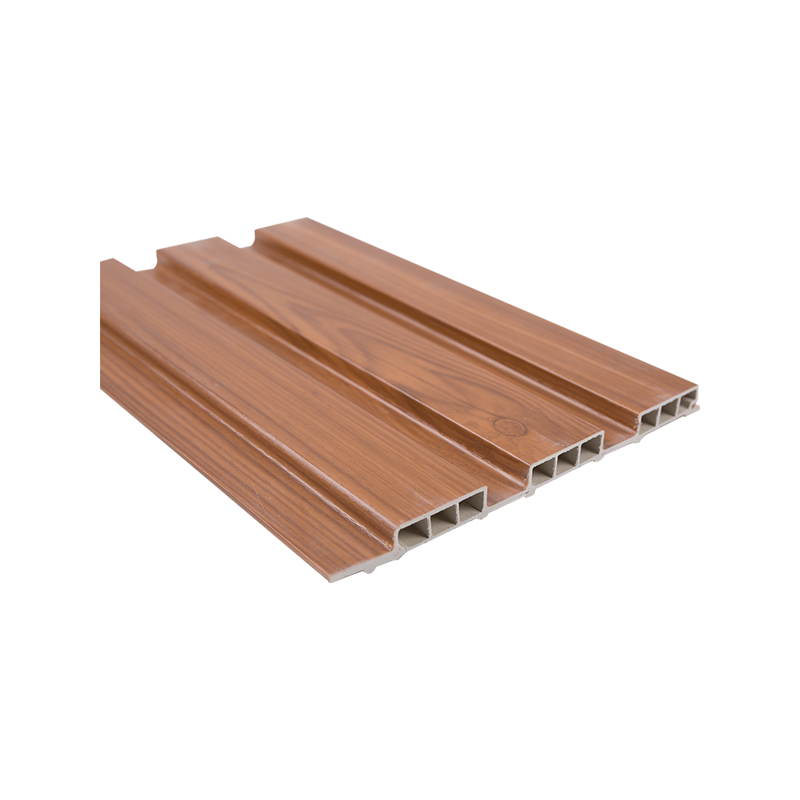
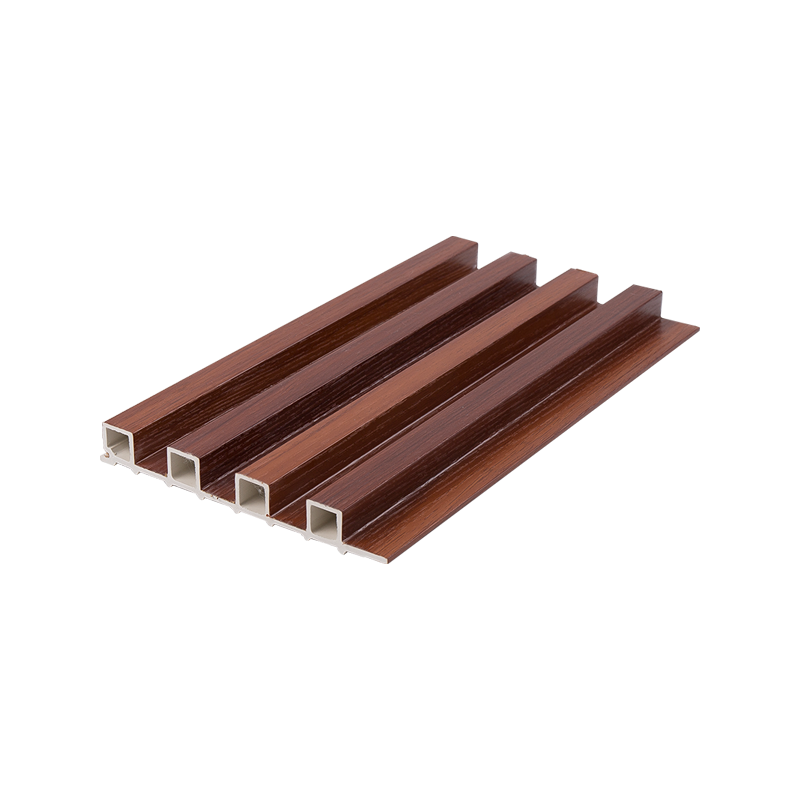
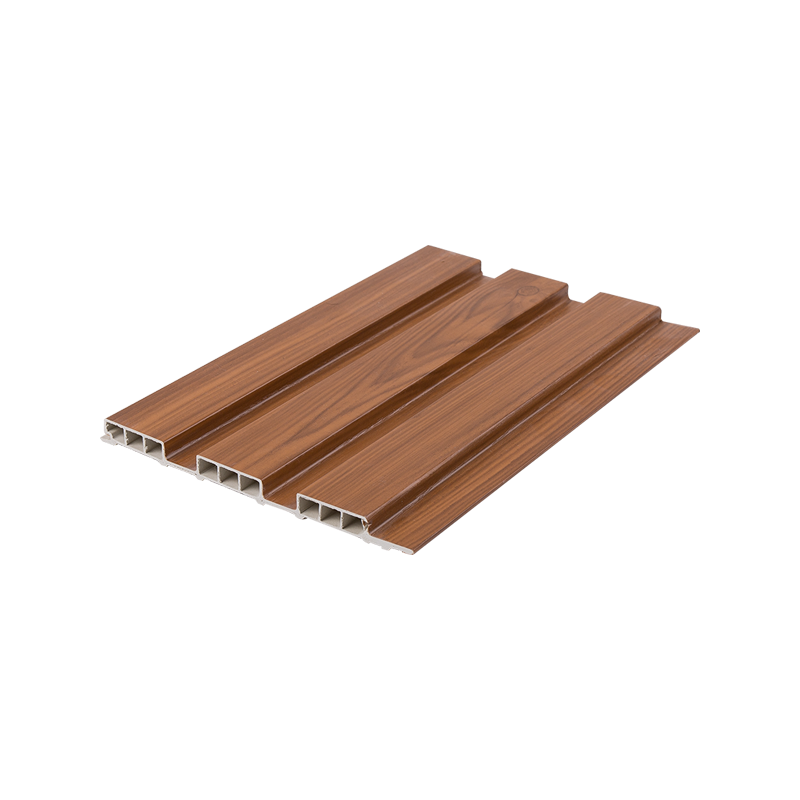
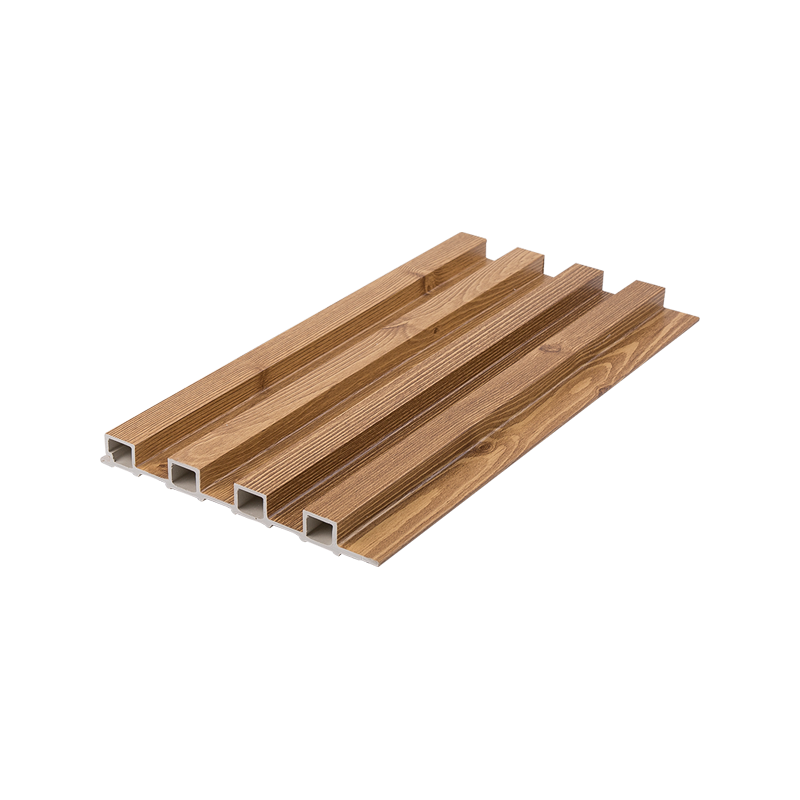
186*14mm WPC Louvers Wall Panel Interior Material
Quantifying Moisture Resistance: The WPC Wall Panel Moisture Absorption Rate Test
Unlike traditional materials that absorb moisture directly into their cellular structure, the polymer encapsulation in WPC significantly limits water uptake. The performance metric used to gauge this is the moisture absorption rate (MAR).
Standard Testing Protocols (e.g., ISO 62 or ASTM D570)
- Procedure: The WPC wall panel moisture absorption rate test involves soaking samples in distilled water for a specific period (e.g., 24 hours or 28 days) and measuring the percentage increase in weight.
- Technical Expectation: High-quality WPC (Wood-Plastic Composite) formulations should exhibit an MAR significantly lower than non-composite wood materials, confirming their inherent resistance to saturation.
Benchmarking Absorption Rates: WPC vs. Traditional Materials
The polyethene or PVC component within the WPC effectively shields the wood fiber core. This engineering design ensures the material maintains structural integrity where other materials rapidly fail. The difference in MAR provides a clear technical argument for using WPC in moisture-prone zones.
Moisture Absorption Rate Comparison Table (24-Hour Immersion)
| Wall Panel Material | Primary Component | Typical Moisture Absorption Rate (%) |
|---|---|---|
| High-Quality WPC decorative wall panel | Polymer-Encapsulated Composite | $\lt 1.5\%$ |
| MDF (Medium-Density Fiberboard) | Wood Fiber/Resin | $7\% - 12\%$ |
| Plywood (Standard Grade) | Wood Veneers/Adhesive | $5\% - 10\%$ |
Application Suitability: Using WPC Decorative Wall Panel for Wet Areas
Given its technical performance, the WPC decorative wall panel is uniquely positioned as a primary choice when specifying WPC decorative wall panel for wet areas</strong > due to its structural water resistance.
WPC Wall Panel Water Resistance Performance in High-Humidity Environments (Bathrooms/Basements)
- Non-Porous Surface: The decorative surface layer (often PVC film or lamination) of the WPC decorative wall panel is non-porous and highly resistant to surface water penetration, meaning spills or splashes will not soak into the material.
- Core Protection: Even if the surface were compromised, the WPC core maintains its shape and strength because its polymer matrix protects the wood fibers from water damage, ensuring superior WPC wall panel water resistance performance.
The Critical Role of Installation Sealing in Wet Areas
While the panel itself is waterproof, successful application in wet areas requires rigorous attention to the installation system. Joints, seams, and perimeter edges must be correctly sealed with flexible, mold-resistant sealant to prevent water ingress behind the panels and onto the substrate.
Application Suitability Comparison Table
| Application Area | Required Panel Performance | Suitability of WPC decorative wall panel |
|---|---|---|
| High-Splash Zone (Shower Surround) | Requires full waterproofing and sealed joints. | Suitable (With proper sealing) |
| High-Humidity Area (Basement/Bathroom) | Requires low moisture absorption and biological resistance. | Excellent (WPC decorative wall panel for wet areas</strong > is highly recommended) |
Long-Term Integrity: Dimensional Stability of WPC in High Humidity
Preventing Warping and Swelling (Thickness Swell Testing)
- Dimensional Stability: The low MAR directly translates into exceptional Dimensional stability of WPC in high humidity. Unlike fiberboard which swells and delaminates when wet, high-quality WPC retains its original dimensions. This is verified by "thickness swell" testing, where minimal change is observed after immersion.
- Structural Integrity: Maintaining stability prevents panel-to-panel separation, preserving the seamless aesthetic and the integrity of the installation system.
Biological Resistance: The Anti-mildew properties of WPC paneling
The primary reason for mold growth is the availability of organic material (wood/cellulose) and moisture. Because the plastic component in WPC encapsulates the wood fibers, it severely restricts the organic material available to fungi. Furthermore, the lack of significant moisture absorption ensures that WPC does not create the damp conditions conducive to mold growth, underscoring the intrinsic Anti-mildew properties of WPC paneling.
Haining Jiazhimeng Integrated Home Co., Ltd.: Commitment to Durability
Haining Jiazhimeng Integrated Home Co., Ltd., based in Haining City, Zhejiang, has 17 years of experience in interior decoration materials, with WPC development beginning in 2013. We are a factory enterprise committed to R&D and advanced technology, focusing on producing WPC wallboard designed for durability. Our products, exported to markets including Southeast Asia and the Middle East, are engineered for high performance in challenging climates. We provide customized services, ensuring our WPC decorative wall panel solutions meet rigorous technical standards, offering proven Dimensional stability of WPC in high humidity and robust WPC wall panel water resistance performance. Our dedication to quality and continuous innovation helps our partners achieve win-win results by providing reliable, long-lasting products.
Frequently Asked Questions (FAQ)
1. How is the waterproof quality of a WPC decorative wall panel scientifically measured?
It is measured using the WPC wall panel moisture absorption rate test (MAR), typically standardized by ISO or ASTM, which quantifies the percentage weight gain after prolonged water immersion. High quality WPC should have a MAR below 1.5%.
2. Is the WPC decorative wall panel for wet areas truly suitable for a shower or bath surround?
Yes, WPC is suitable for high-humidity areas, including shower surrounds, due to its low moisture absorption core. However, successful use requires that all joints, seams, and perimeters are meticulously sealed with a proper waterproof sealant to maintain the overall system integrity.
3. What makes WPC resistant to mold, confirming the Anti-mildew properties of WPC paneling?
WPC is resistant because the plastic component encapsulates the wood fibers, significantly limiting the moisture and organic cellulose available for mold and fungi to feed on, unlike traditional fiberboard.
4. What is the relationship between the moisture absorption rate and the Dimensional stability of WPC in high humidity?
They are directly related: a low moisture absorption rate (MAR) means less water penetrates the core. This low penetration ensures that the panel does not swell or warp, resulting in excellent Dimensional stability of WPC in high humidity.
5. How does the WPC wall panel water resistance performance compare to MDF or HDF panels?
WPC exhibits dramatically superior water resistance. MDF/HDF panels swell and lose strength rapidly upon water exposure (high MAR), whereas the polymer content in WPC protects the core, maintaining both shape and mechanical properties.

 Tel:
Tel:
 E-mail:

